

HOW KARTO WORKS
Build a complete plan
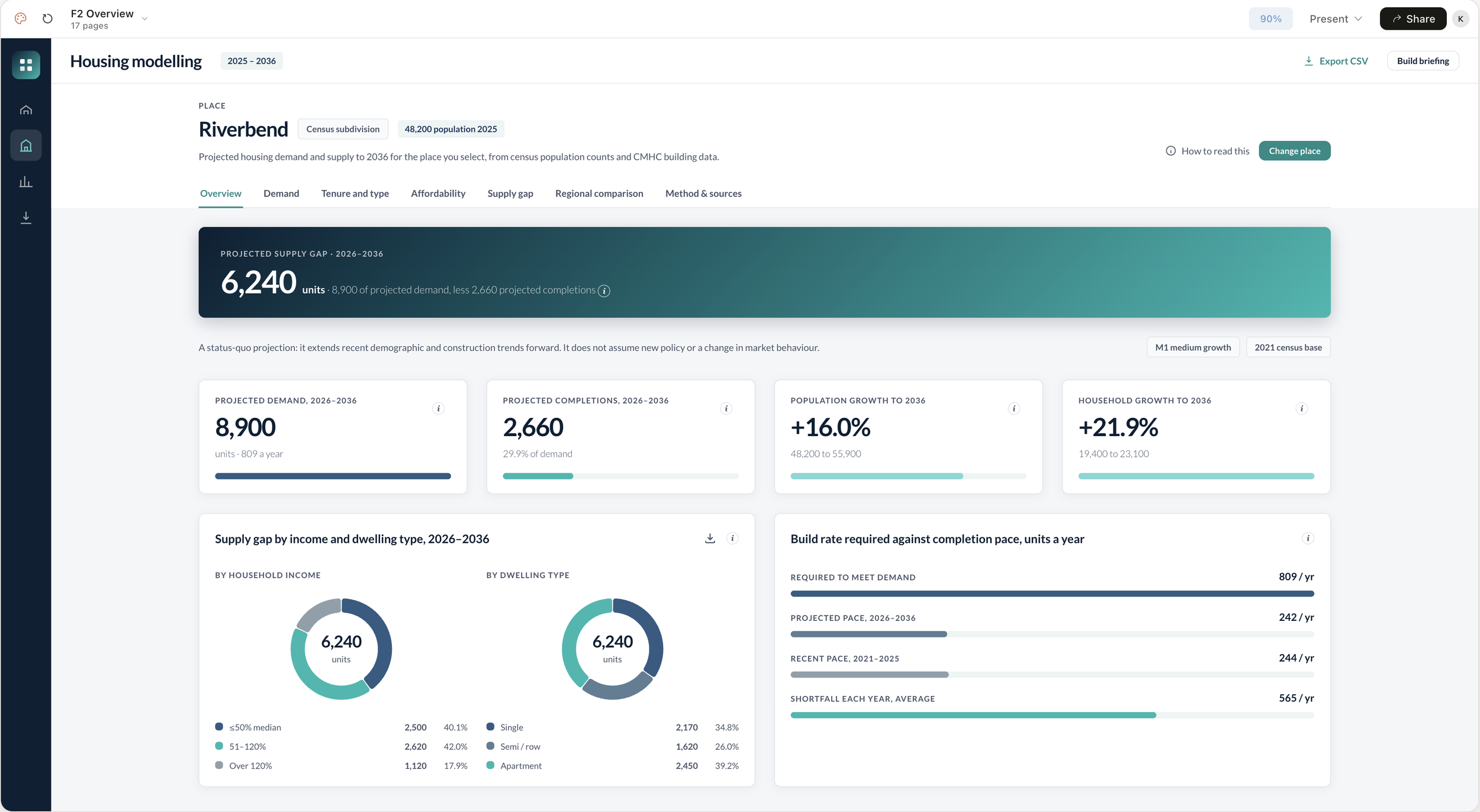
Karto connects how much housing is needed, how homelessness may change and what the required deeply affordable housing portfolio will cost.
ONE
Start with housing need.
Use public and local data to estimate housing need by type.
Test supply assumptions and see how proposed housing changes the gap.
TWO
Model homelessness over ten years.
Karto starts with current homelessness, programs, housing, capacity, performance and cost, then builds 25 ten-year estimates across assumptions about how quickly homelessness is growing and how many people exit or self-resolve without a program intervention.
Staff select the most credible baseline under current services and capacity. The assumptions remain visible and adjustable.
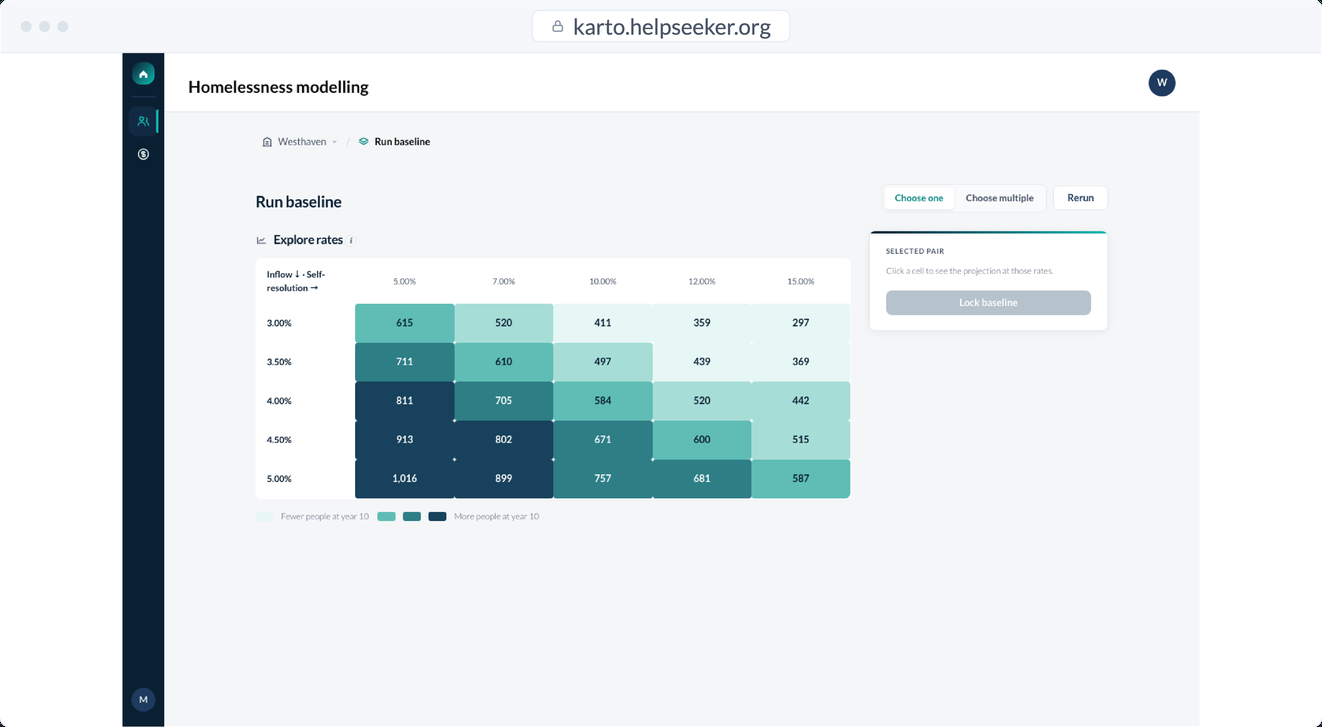
Select the baseline from 25 ten-year estimates, then lock it as the reference for every scenario.

THE COMPARISON
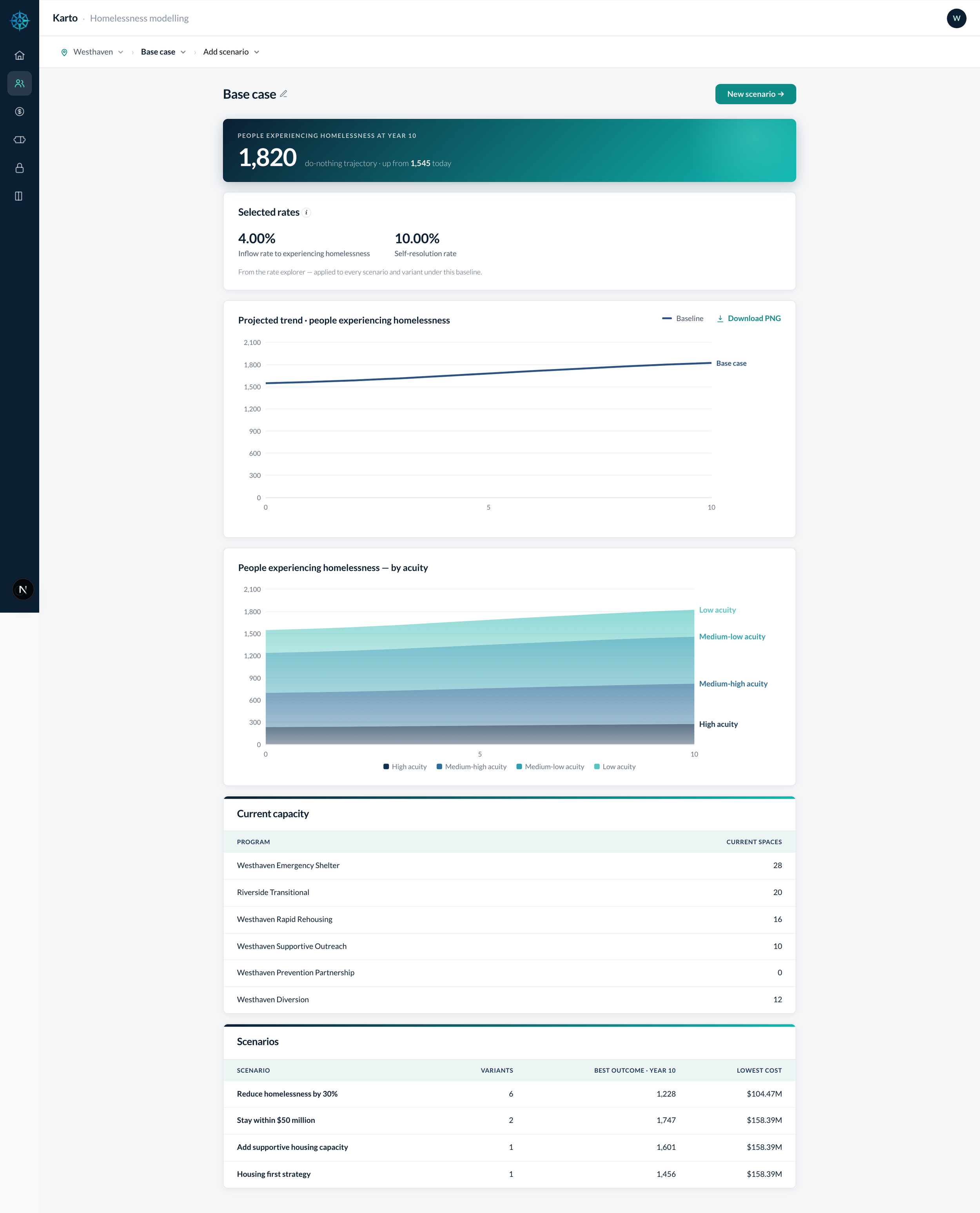
Change the response, then read one table.
Staff change
Prevention and diversion, program capacity, supportive housing, deeply affordable housing, program performance and available budget, in any amount, timing or mix.
Karto calculates
Homelessness over ten years, people housed or prevented from entering homelessness, pressure on the homelessness system, total cost and remaining need.
THREE
Cost the housing response.
Add proposed projects with their housing type, unit counts, affordability level, timing and delivery approach.
The pipeline shows what is proposed, when it may proceed and what it would provide.
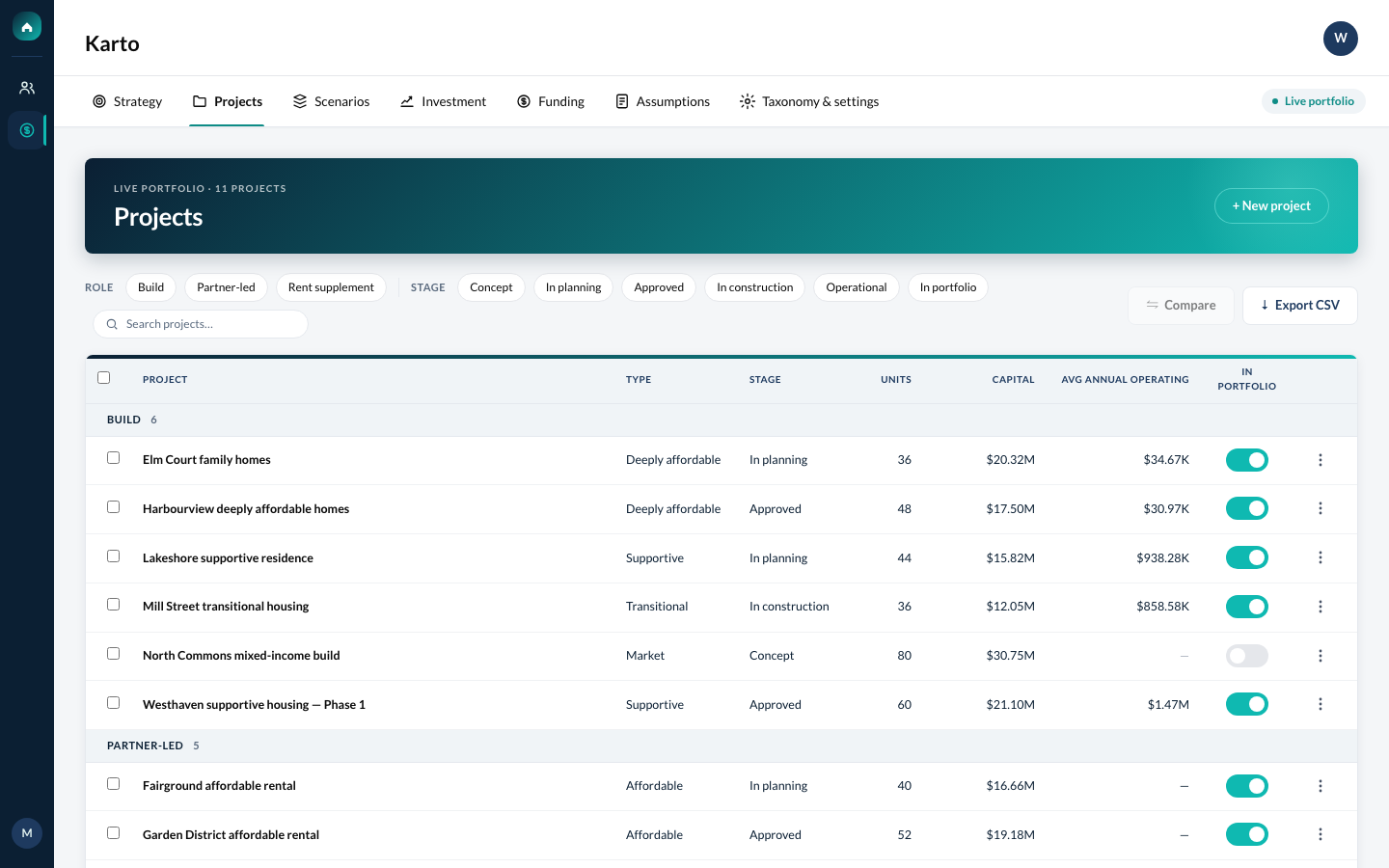
The pipeline in one place: type, stage, units and capital cost for every proposed project.
PROJECT PORTFOLIO
Model each project, then test the funding.
Model each project
Land and construction, operating costs, rental and other revenue, debt and financing, ongoing repairs and renewal, and municipal funding, land and incentives.
See the portfolio
Projects, units and housing types, total capital cost, operating costs and revenue, funding gaps and debt, thirty-year municipal cost and future repair requirements.
Test funding scenarios
Change which projects are included, unit counts and timing, the housing mix, federal and provincial funding assumptions, and municipal reserves, land and debt.
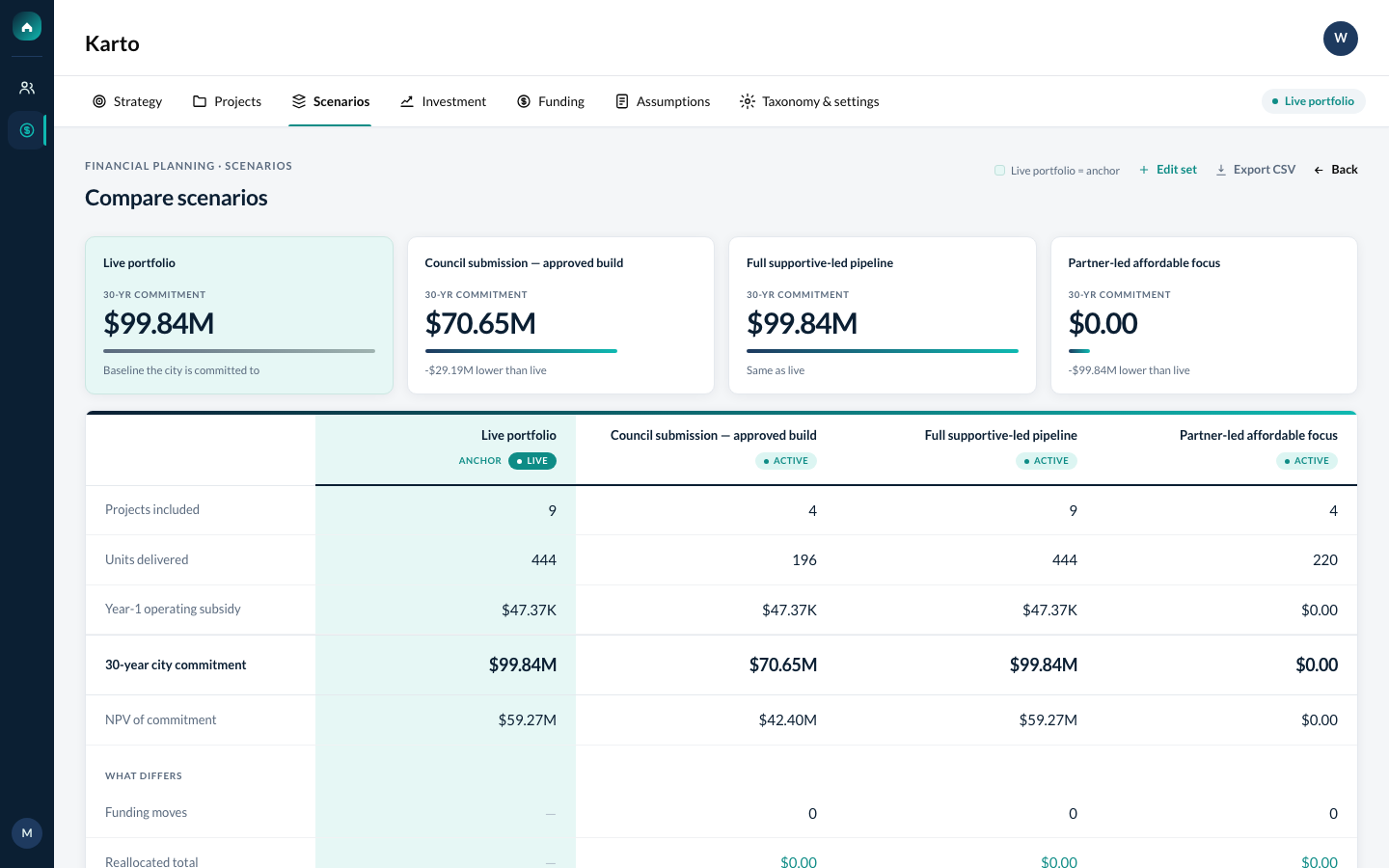
Compare project and funding mixes across capital, operating and long-term municipal costs.
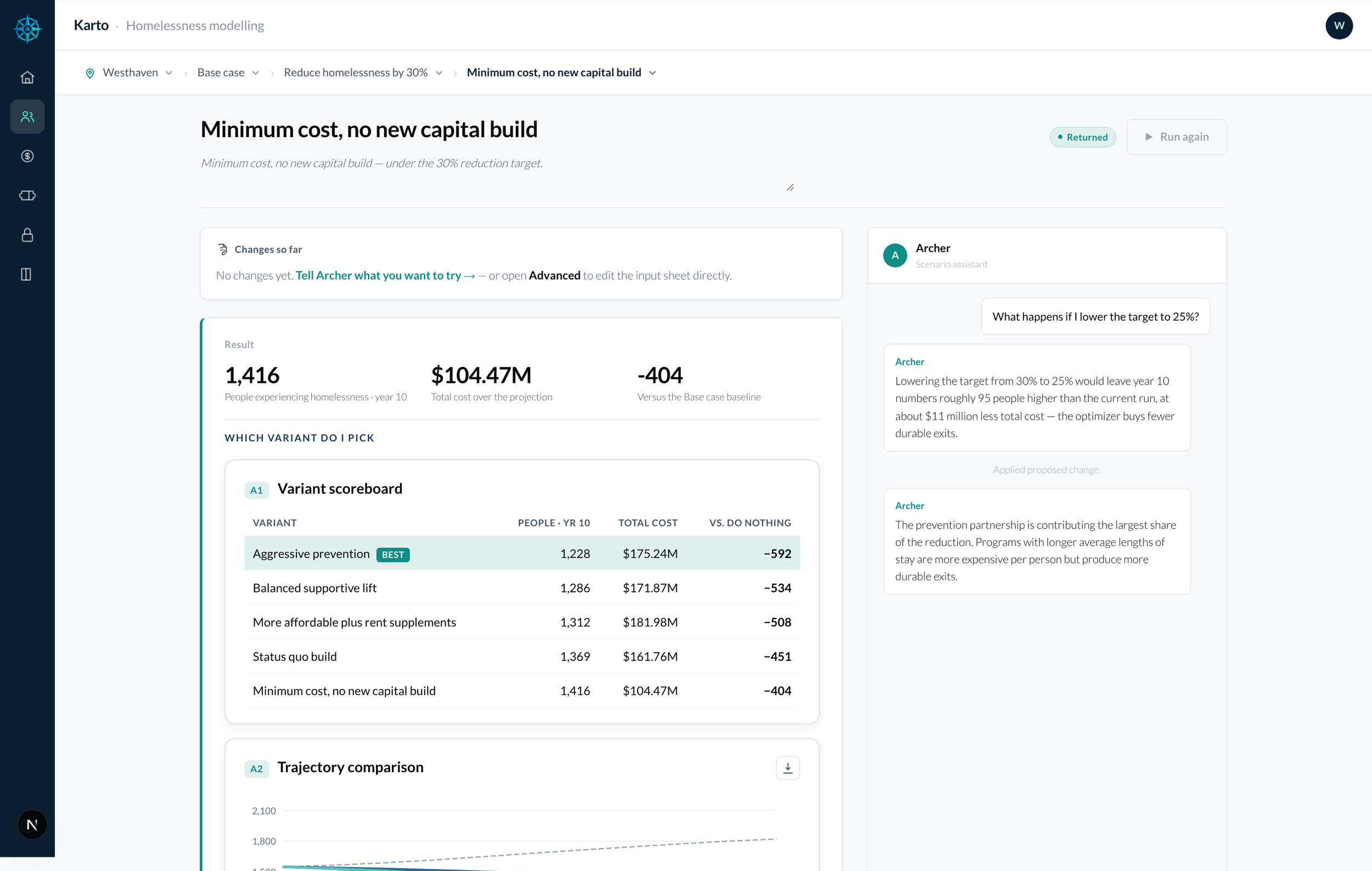
ARCHER · HELPSEEKER’S AI PLANNING ASSISTANT
Ask Archer.
Ask Karto's built-in AI assistant questions about the plan in plain language. Archer answers from the community's data, assumptions and results. Karto handles the calculations, and staff approve every change.
Archer explains what is driving a result, compares scenarios, shows how a different assumption changes the plan, helps test housing, service and funding options, and summarizes the findings for planning discussions.
IMPLEMENTATION
Start in four weeks.
Then run scenarios, update data and maintain the plan with monthly HelpSeeker support.
The modelling method and the security and procurement detail are set out in full.
-
Choose the decision, data and people involved.
-
Add programs, projects, costs and assumptions with HelpSeeker.
-
Build and review the first projections, scenarios or pro formas.
-
Learn to update assumptions, run scenarios and interpret results.

NEXT STEP
Bring a planning question.
We will show you how Karto models the options and costs.